What Is Negative Self-Talk?
Negative self-talk refers to the automatic, critical thoughts we say to ourselves often without even noticing. These thoughts are sometimes called automatic negative thoughts or cognitive distortions in psychology.
Common examples include:
“I’m not good enough.”
“I’ll never succeed.”
“Everyone else is doing better than me.”
While everyone experiences occasional self-criticism, persistent negative self-talk can have serious effects on mental and physical health.
The Impact of Negative Self-Talk
The Impact of Negative Self-Talk
1. It fuels anxiety and depression
Research shows repetitive negative thinking is one of the strongest predictors of depression and anxiety symptoms (Beck, 1976; Clark & Beck, 2010). When we constantly criticise ourselves, the brain begins to believe these distorted messages, lowering mood and motivation.
2. It increases stress and physical health risks
Negative self-talk triggers the body’s stress response, raising cortisol and heart rate. Over time, this “perseverative cognition” (Brosschot et al., 2006) increases risk for cardiovascular problems and other stress-related illnesses.
3. It reduces resilience and problem-solving
When people tell themselves “I can’t cope”, they’re more likely to avoid challenges, withdraw socially, and miss opportunities for growth. This cycle reinforces helplessness rather than building resilience.
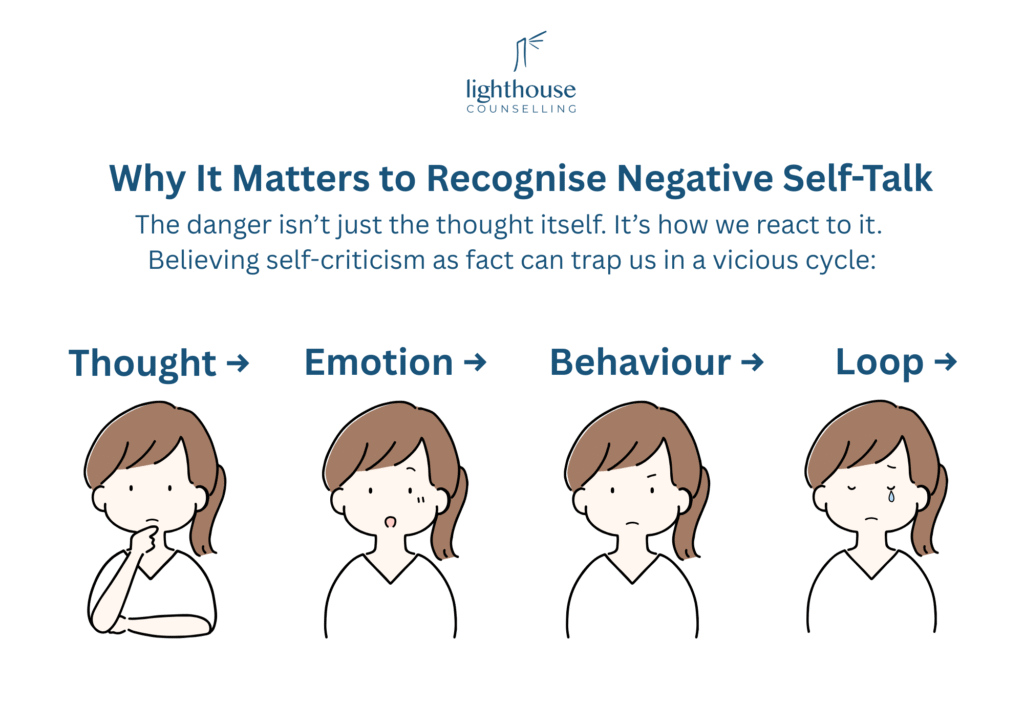
Why It Matters to Recognise Negative Self-Talk?
The danger isn’t just the thought itself. It’s how we react to it. Believing self-criticism as fact can trap us in a vicious cycle:
Thought → Emotion → Behaviour → Reinforcement of the Thought
Example: “I’ll fail this presentation” → Anxiety → Avoidance → Reinforces belief “See, I can’t do it.”
How to Break the Cycle
The good news: negative self-talk can be challenged and changed. Evidence-based techniques like Socratic questioning, cognitive restructuring, and self-compassion practices help people see thoughts as hypotheses, not facts, and build healthier, kinder inner dialogue.
FAQs About Negative Self-Talk
Is negative self-talk always bad?
Not always. Occasional self-criticism can motivate growth. But persistent, harsh self-talk is harmful and linked to poor mental health.
Can negative self-talk cause anxiety?
Yes. Repetitive negative thoughts increase worry, fear, and stress, which are central features of anxiety disorders.
What is the best way to stop negative self-talk?
Practising self-compassion, using Socratic questioning, and seeking professional support are all effective approaches.